


Executive Strategies for Incentives that Deliver Results
At M&IW, we’re not planning your grandfather’s incentive programs. If your programs are stuck in the past, it’s time to modernize them with a strategy designed to drive performance and deliver impactful results. In our recent LinkedIn Live event, M&IW’s Ashley Krueger, CITP, Sr. Manager, Incentives & Engagement, and Sydney Nolan, MBA, CIS, Destination & Experience Design Proposal Specialist, Incentives & Engagement, discussed how to do just that.


While focusing on non-cash incentive programs, they shared valuable insights for meeting the expectations of today’s workforce while achieving stronger program outcomes. They explored:
- How incentive strategies and expectations have shifted.
- How to align incentive programs with business goals.
- How to maximize employee engagement year-round.
Watch the on-demand recording now or keep reading for the event’s top takeaways.
A Strategic Overview: Why Offer Incentive Programs?
Ashley kicked things off by explaining that non-cash incentives have been proven to be more rewarding than cash when recognizing employees.
“It’s about building company culture, building a sense of community and inclusivity,” said Ashley, noting that a recent study shows companies increasing their incentive budgets. “That really reinforces that these programs are seen as strategically important, not just nice to have.”
Sydney agreed, adding that holistic incentive and reward strategies are “a really powerful avenue” in building both culture and trust in a company.
How to Align Incentive Strategies with Business Goals
When discussion how to align incentive programs with business goals in order to create lasting value, it comes down to knowing your why.
“Channel your inner toddler self… and ask ‘Why, why, why?’” said Sydney. “Why is this goal or OKR or KPI going to drive meaningful results to our company? Why is this the goal we’re pursuing?… It’s important to keep asking that why and making sure that you’re asking it to the right people in the right roles at the right time as you’re building out that strategy and figuring out how to align the why of your goals with the why of [which] type of incentive [you’re] pursuing.”
Ashley noted that you can have multiple “whys” behind your strategy, but for every “why,” you need strong stakeholder buy-in and understanding.
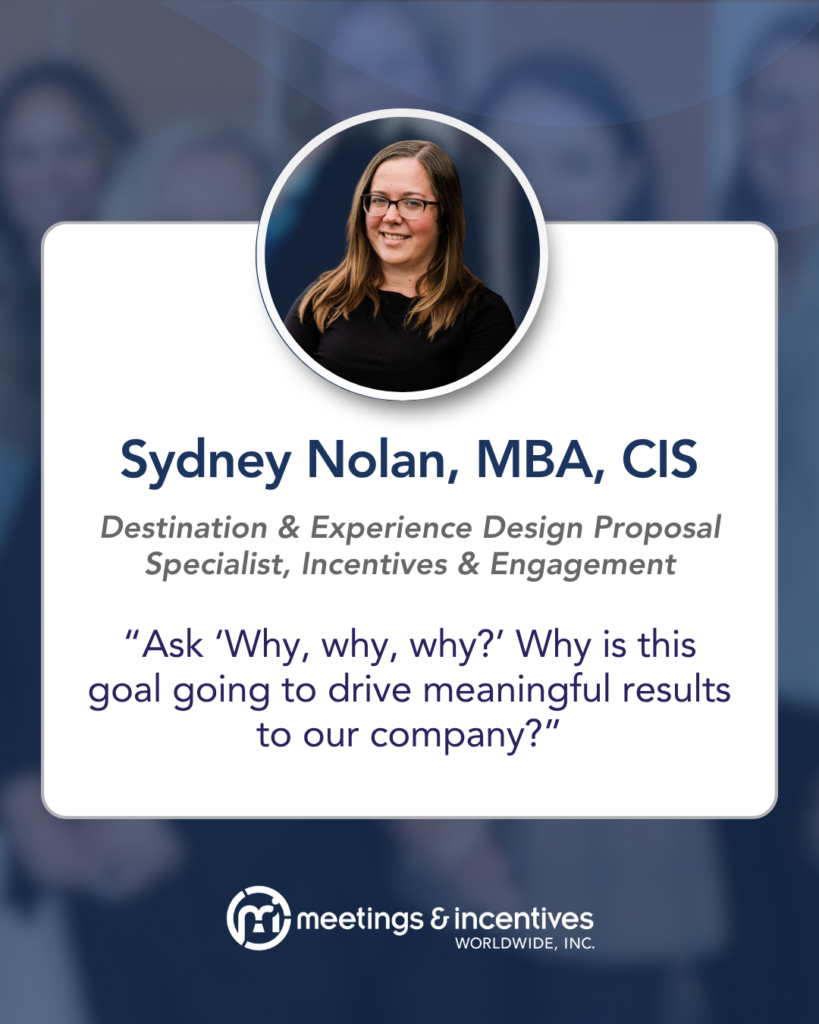
“Where some disconnect can come from is if you don’t have those conversations beforehand, people are going in with different assumptions,” said Ashley. “It allows you to really design to everyone’s expectations and… maximize that strategy not for just that one-time reward but throughout the company, throughout the year.”
How to Collect Data for Incentive Programs
The success and lasting impact of your incentive strategy can’t be determined without the right data.
“Everyone knows participant satisfaction is easy to track… but those metrics really speak more to the event experience itself than outcomes like revenue, retention, behavior change, productivity,” said Ashley.
While data collection and analysis will vary by company based on unique goals and metrics, it’s about “having those conversations with stakeholders, understanding the data that you can get, and then identifying any gaps that there might be … and really define what success looks like for those stakeholders so that we can get them the information that they need,” said Ashley.
How to Keep “Cuspers” Engaged
Cuspers, or employees who almost qualified, are an underutilized audience for maximizing engagement with your incentive program. They have the potential to be the least engaged because they didn’t see their effort pay off, but the key is to work with them so they’re even more motivated next time.
“Maybe that’s [through] one-on-one manager time,” said Ashley. “Maybe that’s sending them the launch video you had onsite…. [You] don’t want it to be a consolation prize, but ‘Hey, we want to work with you since you were so close to make sure that you can go next year.’”
Investing in cuspers make them feel that they aren’t forgotten and still have something to work for.
“[Cuspers] are such a rich place for feedback,” added Sydney. “It’s where you can not only offer that coaching and motivational performance management… but it is also where you can ask for real feedback to figure out what’s not working well in your strategy, or what was confusing, or where does the communication need to be clearer. Where were the missed opportunities?”
How Employee Expectations Around Incentives Have Changed
As Sydney noted during the event, today’s incentive programs are no longer the rewards trips of your grandfather’s day.
Today’s programs are “very relevant, very current, very fresh,” said Sydney. “And it’s relevant and fresh because we’re keeping up with this shifting definition of what it means to deliver an unforgettable experience or a luxury experience… The more that [you] can figure out ways to personalize and to customize, you’re really meeting those shifting expectations and that changing definition of what a… luxury incentive really looks like.”
“Employee expectations have shifted from more pay and perks to purpose and choice,” agreed Ashley, “especially with younger generations who have shown that they’re willing to walk away from rewards that conflict with their values. We’re seeing a clear shift from, ‘Is this reward exciting?’ to more, ‘Is this aligned with who I am and what I want my company to stand for?’”
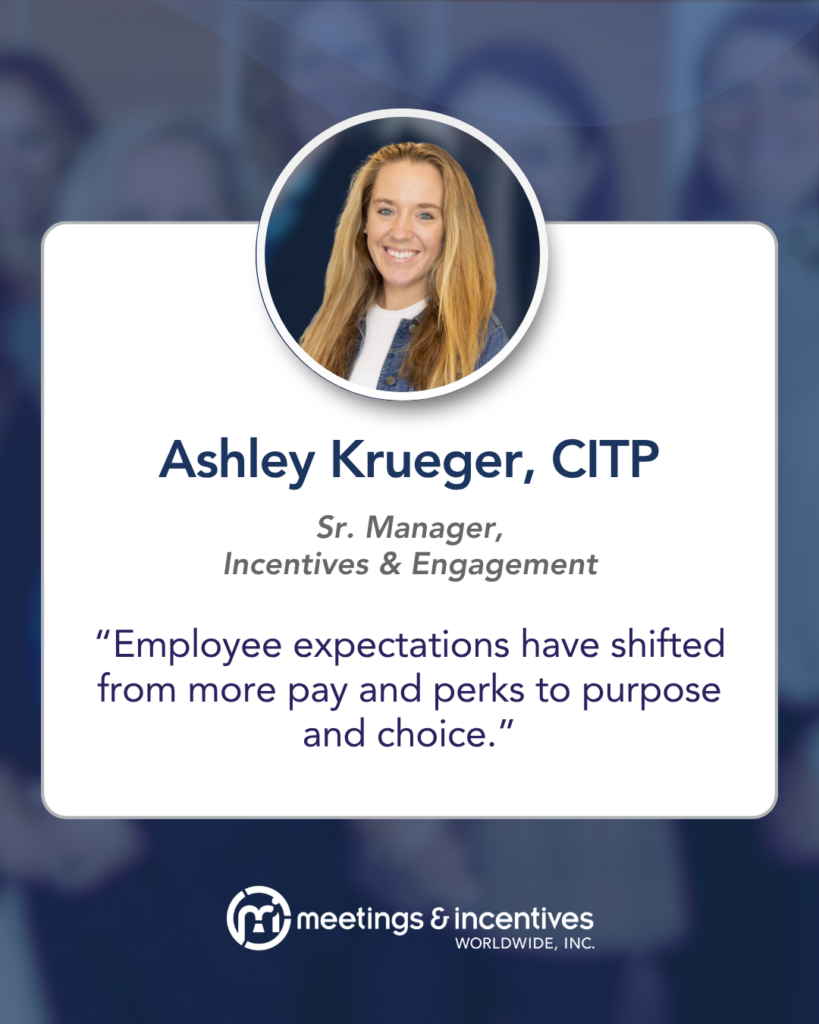
While employee expectations may differ across generations, some shifts are more universal.
“Across generations, not just younger generations… there’s a much higher emphasis on work-life balance, flexibility, and mental wellbeing as being nonnegotiable,” said Ashley.
Strengthen Your Incentives & Engagement Strategy
Other topics discussed during the event include:
- Real-world examples of connecting company goals and value to incentive experiences.
- Communication and marketing strategies for incentive programs.
- Recommendations for creating a budget for an incentive or gifting program.
- What not to do with your incentive strategy.
Access the on-demand recording now to strengthen your incentives and engagement strategy and deliver results that meet the demands of stakeholders and attendees alike.
Interested in learning more or have a question for Ashley and Sydney? Contact M&IW’s Incentives & Engagement team.
Related Articles
- Group vs. Individual Incentive Travel: Pros and Cons
- How Executive Retreats Align Leadership for Long-Term Impact
To stay up to date on the latest trends and insights in corporate meetings, events, and incentives, join our mailing list or follow us on LinkedIn.