


Group vs. Individual Incentive Travel: Pros and Cons
Originally published March 19, 2025. Updated May 20, 2026.
Incentive travel programs are an effective way to connect, motivate, and engage employees by delivering unforgettable experiences that maximize your return on investment. While group travel programs have long been a staple of the incentive industry, individual incentive travel is another compelling reward for C-suite leadership to strategically deploy.
There are many benefits to both types of incentive travel, and the best fit for your organization depends on your total reward structure.
M&IW’s Tracy Norum, CMP, CITP, CIS, Sr. Director of Incentives and Engagement, and Sydney Nolan, MBA, CIS, Destination & Experience Design Proposal Specialist, share the pros and cons of both types of incentive travel based on collective insights from M&IW’s Incentives & Engagement team.
Related: Executive Strategies for Incentives that Deliver Results

Group Incentive Travel
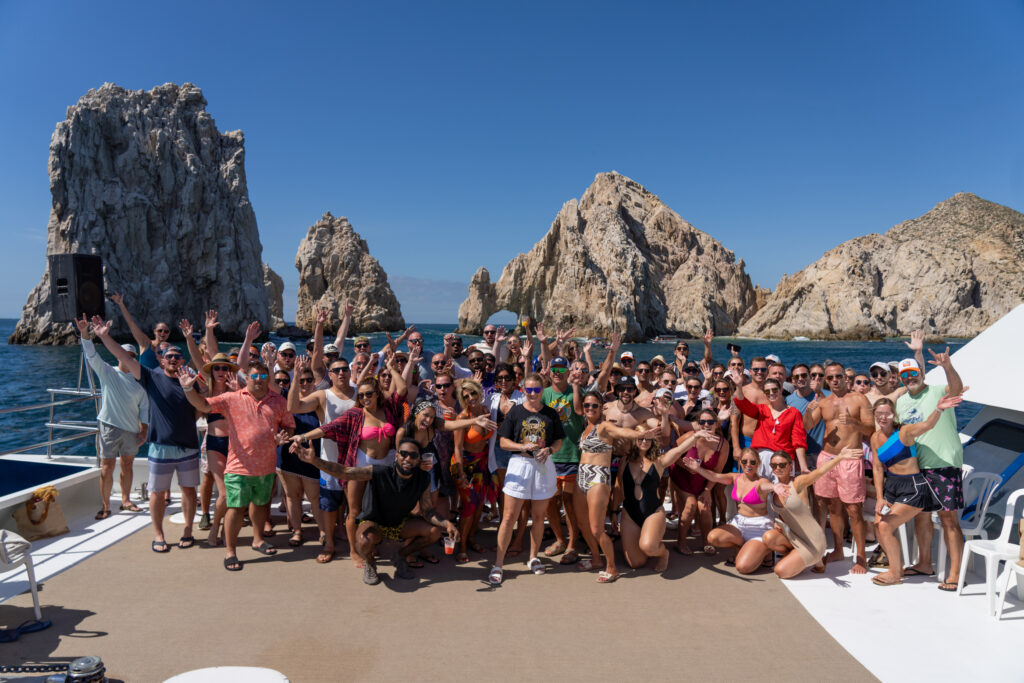
Group incentive travel is when your incentive program’s participants travel together to the same destination at the same time or in successive “waves” of achievers. In addition to the employee who earned the reward, members of the executive team often attend, and reward-earners can typically invite a guest to join them.
While group incentive trips used to primarily consist of back-to-back full-group events, agendas have now shifted in favor of custom and personalized experiences. Trips may still include full-group receptions, including an awards presentation or gala dinner, but many now also feature small-group “dine around” dinners and excursions, optional CSR activities, and “time at leisure.”
Gifting is also often involved in group incentives, both pre- and post-trip and onsite with room drops and experiential gifting.
“It’s an opportunity for attendees to connect with top performers in other departments or regions… [providing] an opportunity for human connection [and] combatting burnout and loneliness in the workplace.” –Tracy Norum, CMP, CITP, CIS
Pros of Group Incentive Travel
The strongest benefit of group incentive travel programs in comparison to individual incentive travel is the opportunity to build relationships with peers and executives and strengthen your corporate culture.
“It’s an opportunity for attendees to connect with top performers in other departments or from regions they might not work or engage with otherwise, allowing them to learn from each other and build new relationships,” said Tracy. “Particularly for companies with hybrid or remote workforces, these trips provide an opportunity for human connection, combatting burnout and loneliness in the workplace.”
“Group incentives deliver key opportunities to publicly and memorably celebrate qualifiers’ successes,” adds Sydney. “This inspires longer term loyalty and improves employee engagement, even after returning to the office.”
Group programs can include onsite learning opportunities such as seminars, executive listening and feedback sessions, or other education.
“Including a business meeting component can provide potential tax advantages by allowing a portion of the program costs to be treated as business-related,” says Tracy . “Still, today’s trips are more centered on the attendee experience. Whether or not a trip includes an educational component and to what degree is a reflection of the company’s corporate culture.”
Cons of Group Incentive Travel
As exciting as group incentive travel is for qualifiers, it may alienate non-qualifiers and build resentment if the same employees attend year over year. This can be countered with an engaging incentive marketing plan that includes a leaderboard so employees can actively see their standing and know leadership isn’t playing favorites.
“M&IW’s customers are focusing more on qualification tracking and communication around contests to avoid alienating those who miss the cut,” says Tracy. “We’ve also seen a new generation of leaders designing contests to be more inclusive by expanding qualification criteria. It’s not necessarily increasing the number of qualifiers but the number of people or roles who are eligible in the first place.”
Another con to group incentives is that achievers can’t choose the reward destination. If it’s somewhere they’ve already been or simply aren’t interested in, they may not be as motivated to qualify. There’s also the potential for scheduling conflicts where even if an employee does qualify, they’re unable to attend.
Combat these by traveling to a new destination each year or introducing new elements and creative solutions if repeating where you go. Always have a backup plan in place so qualifiers who can’t attend still get the recognition they deserve.
“Creative marketing efforts and contest promotion can be your ally here,” says Sydney. “Rolling out ‘drip campaigns’ during the qualifying period to tease destination highlights, promote trip inclusions, and build anticipation can nudge performance and motivate on-the-fence or on-the-cusp employees.”
Finally, many organizations with group incentive travel programs feel pressure to outdo previous programs. Fortunately, you can take the pressure off by partnering with a third-party agency like M&IW to make each year’s incentive a uniquely memorable experience.

Individual Incentive Travel
Participants in individual incentive travel (IIT) programs do not travel as a group but instead choose from a range of destinations and itineraries for a completely custom experience.
Unlike group travel, which typically only allows attendees to bring one guest, IIT trips may cater to families with some options allowing multiple guests, including children.
Like group incentive travel, IIT can also include gifting experiences, usually pre-trip, and reward-earners receive VIP concierge service during booking and traveling.
“The solo angle of IIT may seem more rewarding to some employees… IIT rewards provide a true break from work without the pressure to network or talk shop.” –Sydney Nolan, MBA, CIS
Pros of Individual Incentive Travel
The biggest benefit of individual incentive travel is the ability to customize and align with an achiever’s preferences. Because there’s greater flexibility in when and where a trip can be taken, participants can schedule around preexisting conflicts.
“The solo angle of IIT may seem more rewarding to some employees,” says Sydney. “Unlike group incentive travel, where attendees are still with colleagues and company leadership, IIT rewards provide a true break from work without the pressure to network or talk shop.”
Depending on the terms and conditions of an IIT reward, some achievers may opt to bring more guests with them and pay for any additional expenses out of their own pocket, expanding who they choose to celebrate their achievements with even further.
For organizations, IIT avoids the hassle of managing logistics for large groups and can offer greater flexibility in terms of destinations and timelines. When partnering with a third-party agency like M&IW, IIT is also more hands-off than group travel programs.
“We design individual IIT offerings, handle logistics internally (including airlift, if desired), and provide updates on trips booked and taken as often as requested,” says Tracy.
Cons of Individual Incentive Travel
Unlike group incentive travel, individual incentive travel doesn’t allow for professional relationship building or networking. While some participants may prefer this, studies show that the relational benefits of incentive trips last long after the programs themselves.
However, hosting a small in-person or virtual celebration after qualifiers are announced and before travel is redeemed still gives you an opportunity to recognize achievers. These moments of celebration can also be complemented by a gifting or other engagement opportunity, providing you with another tool to recognize and reward standout performance.
Still, while individual incentive travel can be easier for organizations to manage, firms lose out on the opportunity to craft bespoke programming and the cost savings this can yield.
“When traveling with a large group, we negotiate discounts, concessions, and amenities on everything from flights and hotel rooms to excursions and spa services,” says Tracy. “When all travel is booked at the individual level, you can’t take advantage of these group discounts and inclusions.”
“Hotel and resort availability can also vary between group versus individual incentives,” adds Sydney. “Different properties and destinations are often better suited to one reward type over the other. For example, boutique properties typically lend themselves better to individual travel.”


Maximizing Your Incentive Travel Programs
Whether your program objective is relationship building or relaxation, connections or celebrations, incentive travel programs can be completely customized to meet your needs—and your participants’, too!
In addition to managing incentive travel strategy, experience design, and logistics, M&IW manages qualification contests and promotions as well as gifting and other employee engagement initiatives.
Contact us to explore the possibilities and elevate your current or future incentive programs. Already an M&IW customer? Contact your Customer Success Manager to discuss adding incentive travel to your event portfolio.
Watch On Demand: Executive Strategies for Incentives that Deliver Results
M&IW’s Incentives & Engagement team recently held a live event on how, when, and why to incentivize employees in a way that drives performance and delivers sustained results. The discussion features valuable insights for meeting the expectations of the modern workforce while achieving stronger business outcomes. Click the button below to watch the on-demand recording.
Meet the Experts

Tracy Norum, CMP, CITP, CIS
Sr. Director, Incentives & Engagement
Meetings & Incentives Worldwide, Inc.

Sydney Nolan, MBA, CIS
Destination & Experience Design Proposal Specialist
Meetings & Incentives Worldwide, Inc.
Related Articles
- How Executive Retreats Align Leadership for Long-Term Impact
- M&IW Wins Gala Award for Best Multiple-Day Event Program for a Corporation or Association
- M&IW Receives Two SITE Crystal Award Nominations for Excellence in Incentive Travel
- Score Big with Corporate Sports Hospitality
To stay up to date on the latest trends and insights in meetings, events, and incentives, join our mailing list or follow us on LinkedIn.