
Event Technology Strategy: Why the Right Tech Stack Matters More Than a Bigger One
As organizations expand their meetings and events portfolios, they often respond by adding more technology to solve new challenges. However, larger technology stacks do not necessarily produce better outcomes.
Too many technology solutions may result in a fragmented ecosystem that is difficult to manage, difficult to measure, and difficult for stakeholders to fully utilize. The challenge is determining which technology creates meaningful business value and how those tools work together to support organizational goals.
Event technology optimization is about building an intentional ecosystem aligned with business objectives, attendee needs, data requirements, and governance standards.
Solving Tech Stack Complexity with a Tech Stack Strategy
Organizations now have access to a vast range of meeting and event technology solutions capable of supporting almost every aspect of the event lifecycle, but technology abundance can introduce complexity.
Many enterprise organizations have adopted technology over time through regional purchasing decisions, departmental preferences, or responses to immediate business needs. While each technology may have made sense at the time, organizations now find themselves managing overlapping solutions with fragmented data, unclear ownership, and limited visibility into overall performance.
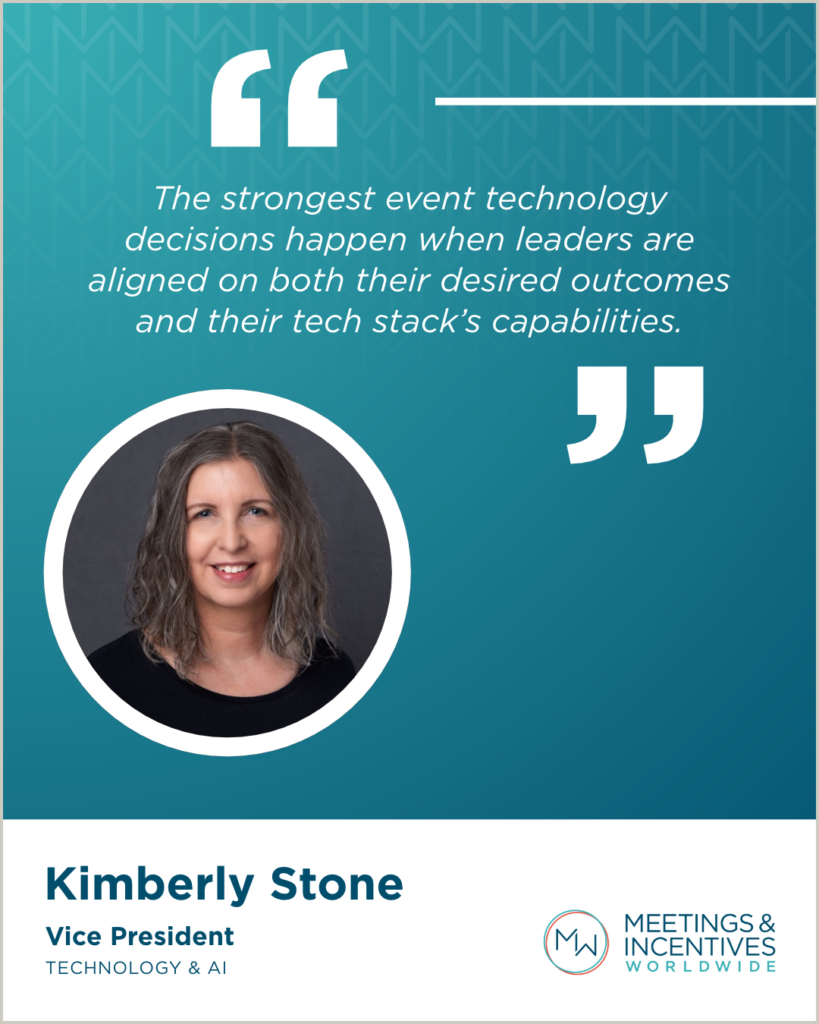
“Organizations sometimes assume technology gaps are causing their challenges when the real issue is a lack of understanding of the capabilities already available,” said Kimberly Stone, Vice President, Technology & AI, M&IW. “The strongest event technology decisions happen when leaders are aligned on both their desired outcomes and their tech stack’s capabilities.”
“Technology should enable strategy,” added Chip Begley, Sr. Director, Event Technology, M&IW. “It shouldn’t become the strategy.”
Aligning Technology Decisions to Business Outcomes
High-performing organizations build event tech stacks holistically rather than piecemeal. Before evaluating platforms, they ask:
- What outcomes are meetings and events expected to drive?
- What data is required to measure success?
- What experience should attendees have?
- What governance requirements must be supported?
- What enterprise systems should event technology connect to?
- How will technology contribute to long-term organizational priorities?
The answers establish the criteria by which technology decisions should be made.
This business-first approach also enables organizations to evaluate emerging technologies more effectively. Rather than adopting AI-powered solutions simply because they are available, leaders can assess whether new capabilities improve decision-making, enhance attendee experiences, strengthen measurement, or create operational value.
Building a Strategic Event Technology Ecosystem
While every organization’s requirements differ, there are several characteristics shared by mature technology programs.
Data Flows Across Systems
Event technology integration enables organizations to connect event data with CRM, marketing automation, procurement, finance, and business intelligence platforms. This creates greater visibility into performance and allows leaders to understand the role events play within broader business objectives.
Governance is Defined and Compliant
Ownership, integration requirements, data management, and security are important considerations for any technology strategy, “especially as AI becoming an increasingly prominent part of event technology,” added Stone.
All technology must be evaluated for compliance with internal IT rules and requirements before it can be approved for an event or M&E program.
Technology is Continuously Evaluated
Business priorities evolve. Event portfolios change. New capabilities emerge. Organizations should regularly review technology and determine whether solutions continue to deliver value relative to cost and complexity.
An annual or biannual event technology assessment can identify opportunities to consolidate systems, improve integrations, eliminate redundant platforms, and strengthen reporting capabilities.
This also applies when evaluating new event technology. A desired user experience is often what drives tech proliferation. The value of that UX must be weighed against the cost, management burden, and data considerations of bringing in additional tech.
The Future of Event Technology
The next phase of event technology strategy will be defined by how effectively an organization’s tech stack supports enterprise objectives. Organizations that maintain discipline around technology governance, event data strategy, integration, and business alignment will be best positioned to adapt regardless of which new platforms emerge.
Meet the Experts

Kimberly Stone
Vice President, Technology & AI
Meetings & Incentives Worldwide

Chip Begley
Sr. Director, Event Technology
Meetings & Incentives Worldwide
Related Articles
- The Why Behind AI: Top 3 Takeaways for Meetings and Events
- 2027 Spend Trends for Meetings & Events Programs
- Proving the Value of High-Impact Meetings and Events
To stay up to date on the latest trends and insights in meetings, events, and incentives, follow us on LinkedIn.